
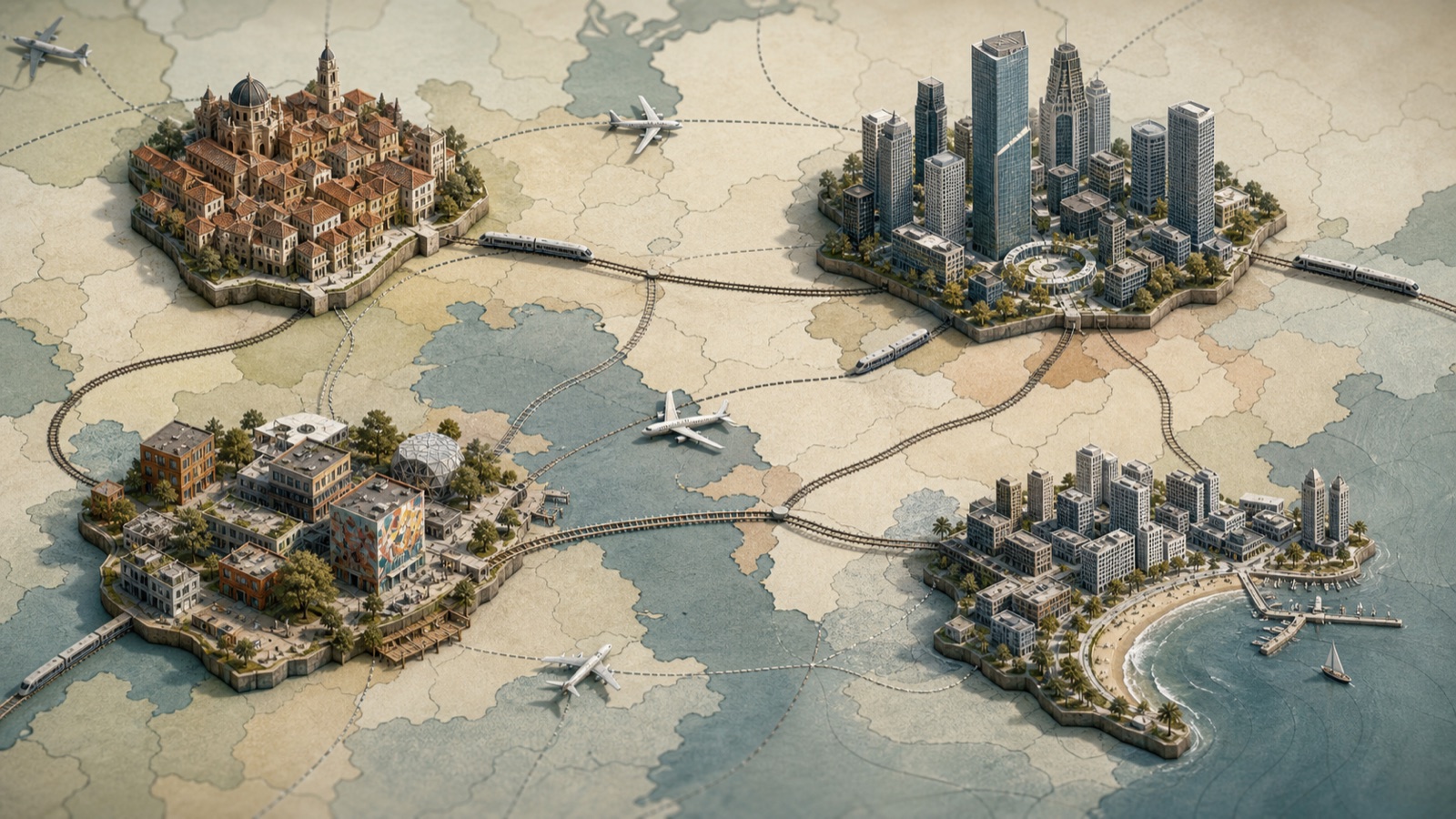
Digital nomads often choose cities more deliberately than countries. The practical experience of living in Berlin, Dubai, Chiang Mai, or Buenos Aires may have more influence on daily life than the national label surrounding each one. As remote work expands, cities are increasingly competing directly for mobile talent, longer stays, and international communities.
Prefer listening? Play now in the BecomeNomad Podcast
This does not mean countries are disappearing. Borders, passports, taxes, laws, and healthcare remain national. But identity and economic competition are shifting toward the urban level—and nomads reveal the change early because they can compare locations quickly.
Cities Change Faster Than National Identities
A city can transform dramatically within a decade. Costs rise, neighborhoods become international, infrastructure improves, industries grow, and the social atmosphere changes. The city someone remembers may no longer exist in the same form.
This is why old destination advice ages badly. A former low-cost creative hub can become unaffordable, while a previously overlooked city develops the infrastructure and community that make it attractive.
Technology Created the Mobile Knowledge Worker
Digital nomadism did not appear from nowhere. The internet, portable devices, cloud software, online payments, and the knowledge economy allowed work to detach from a specific office. Once that happened, location became a choice for a growing group of people.
Cities now compete on the conditions surrounding that work: housing, visas, safety, transport, time zones, community, taxation, and quality of life.
Nomads Are Selective Migrants
People who move across borders are often proactive, adaptable, and willing to rebuild systems around themselves. Digital nomads add portable income and an international network. This makes them attractive to destinations seeking entrepreneurial activity and local spending.
But describing nomads only as desirable consumers is incomplete. They may spend less than short-term luxury tourists, strain housing in concentrated neighborhoods, and remain disconnected from local society.
The Rise of the Digital Nomad Visa
Remote-work visas show countries attempting to formalize a population that previously lived between tourist and residency systems. The policies vary widely and are not always useful in practice, but their existence signals a deeper shift: governments understand that work can arrive without a local employer.
For the nomad, the important questions remain practical. Does the visa simplify life enough to justify the paperwork and tax implications? A program designed primarily for headlines may offer little value.
Small Cities Can Compete
Remote work allows smaller cities and towns to attract people who previously needed to live near large employment centers. Lower costs, nature, and a stronger sense of community can become serious advantages.
This creates an opportunity for places affected by population decline. Yet incentives alone are not enough. Reliable infrastructure, housing, local acceptance, and social connection determine whether people remain.
National Borders Still Matter
The idea that cities are the new countries has limits. Your passport decides where you can enter. National policy determines taxes and legal status. During a crisis, borders can become suddenly powerful again.
Cities shape daily experience; countries shape the framework. Nomads need to understand both rather than allowing lifestyle marketing to hide legal realities.
What Cities Should Build
The most effective strategy is not a campaign declaring a place nomad-friendly. It is a set of conditions that make life function: clear residency information, stable internet, flexible housing, public transport, third places, coworking options, and opportunities to meet residents.
Community cannot be entirely designed from above, but policy can either support or obstruct the people attempting to create it.
A More Flexible Geography
The future may include more people dividing life among several cities: one for focused work, another for family, and another for a recurring community. Home base and movement will coexist rather than compete.
For digital nomads, the useful question is no longer only “Which country should I visit?” It is “Which city supports the life I need at this stage?” The answer can change—and the freedom to change it is one of the central advantages of location-independent work.

0 Comments