
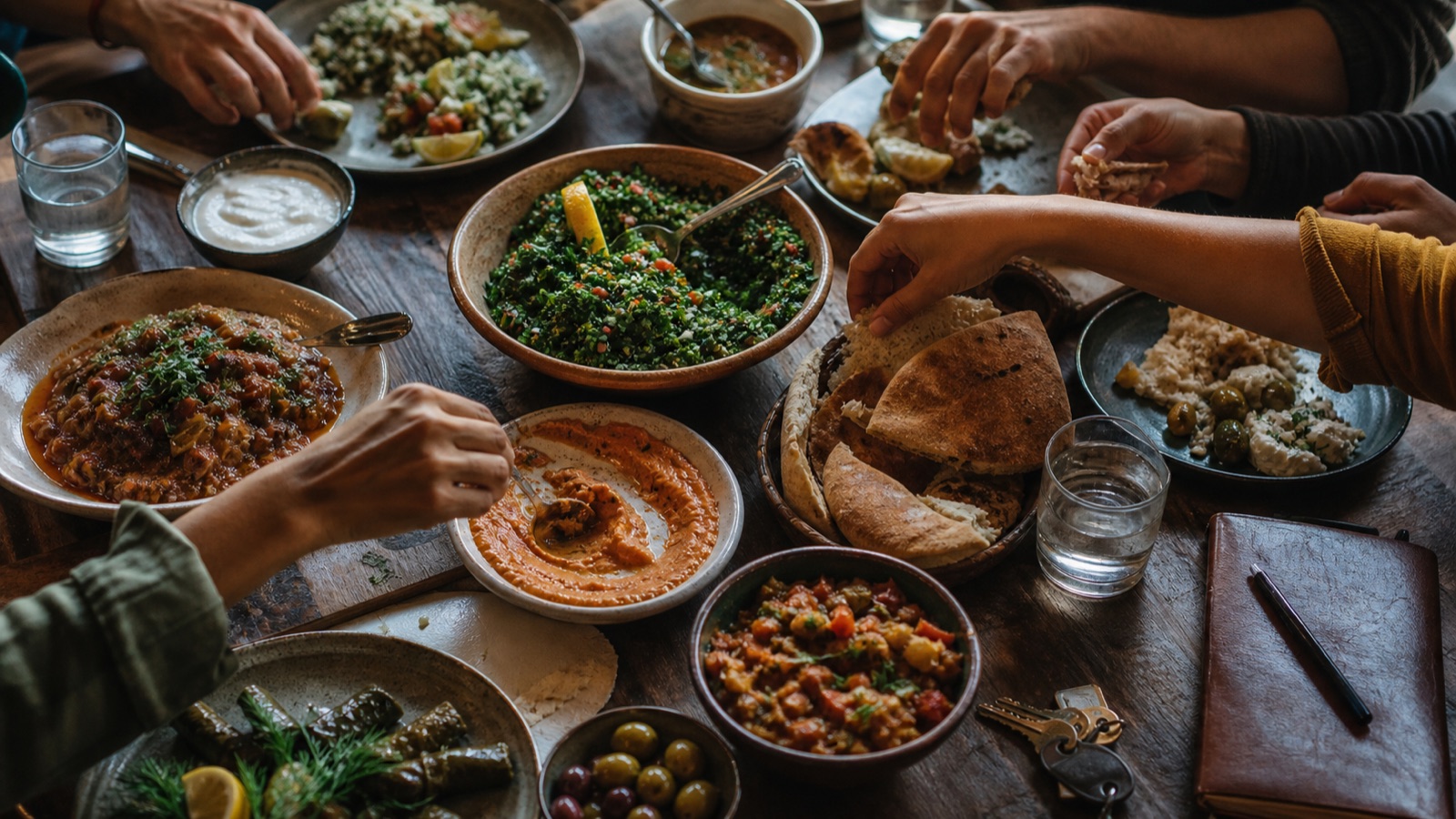
Food is one of the clearest ways to experience a place, but long-term nomads do not eat like people on a short holiday. We balance curiosity with budgets, health, work schedules, temporary kitchens, and the practical need to repeat ordinary meals. Over time, food becomes more than a list of famous dishes. It becomes a measure of routine, community, and how deeply we are actually engaging with a location.
Prefer listening? Play now in the BecomeNomad Podcast
Travel Food Is Different From Nomad Food
A traveler visiting for three days can make every meal an event. A nomad staying for two months eventually needs breakfast on a deadline, something simple after work, and a supermarket strategy. Constant restaurant discovery becomes expensive and exhausting.
This does not make the experience less authentic. Ordinary prepared food, neighborhood bakeries, markets, and grocery stores reveal how people actually live. The humble daily meal often teaches more about a place than the restaurant designed for visitors.
The Meals That Stay With Us
Some destinations become inseparable from a dish. Peru stands out for its range of potatoes, ceviche, pisco, and an inventive food culture that achieved international recognition. Georgia produces one of the strongest comfort foods on the road: khachapuri, the warm bread and cheese dish that can arrive with an egg at its center.
In the United States, even clam chowder can trigger regional arguments. In Israel, sabich deserves more attention beside the internationally familiar falafel and shawarma. These preferences are subjective, and that is precisely why food creates such strong travel memories.
Cooking Requires a Temporary Home
Cooking sounds simple until you change accommodation frequently. A useful kitchen, basic equipment, oils, spices, and ingredients all require continuity. If you move every week, buying supplies makes little sense. The faster the movement, the more likely you are to depend on prepared food and delivery.
This is one hidden advantage of slower nomadism. Staying longer allows the kitchen to become functional. You learn where to buy produce, develop several reliable meals, and recover a rhythm that is difficult to maintain in constant transit.
Food Creates Community
Many memorable nomad spaces are built around a table. People cook together, share what they found in the market, and remain in conversation after the plates are empty. The meal provides structure without requiring a formal event.
This matters because nomadic social life can otherwise become fragmented. Coworking introduces people, but shared food often creates the transition from acquaintance to community. A communal kitchen can be as important as fast internet.
Use Food to Leave the Tourist Route
Restaurants near famous attractions are easy to find and frequently designed around predictable demand. The more interesting discovery often begins several streets away. Look for small places with short menus, busy lunch periods, and customers from the neighborhood.
Markets also offer a low-risk way to experiment. You can try several small things, observe local routines, and learn ingredients without committing to a formal meal. Ask people what they order rather than relying only on ranking platforms; algorithms tend to send everyone to the same places.
Health Changes Across Locations
Dietary intentions meet different realities in every country. Vegetarian food may be effortless in one place and surprisingly difficult in another. Work intensity, climate, social events, and availability all influence what we eat.
It helps to build a few portable rules rather than an impossible perfect diet: drink enough water, include vegetables, avoid turning every day into a celebration meal, and learn several simple foods that can be found almost anywhere. Health claims also change, so be cautious about converting every new study into a permanent personal rule.
Food Is Part of the Structure of Nomadic Life
The way we eat exposes the pace of our movement. Constant delivery may signal an overloaded schedule. A stocked kitchen usually indicates stability. Shared meals reveal community. Local food shows curiosity, while familiar comfort food helps when everything else feels unfamiliar.
The goal is not to become a culinary expert in every country. It is to notice how food connects us to place and to people—and to build a way of eating that allows the nomadic lifestyle to remain sustainable.

0 Comments