
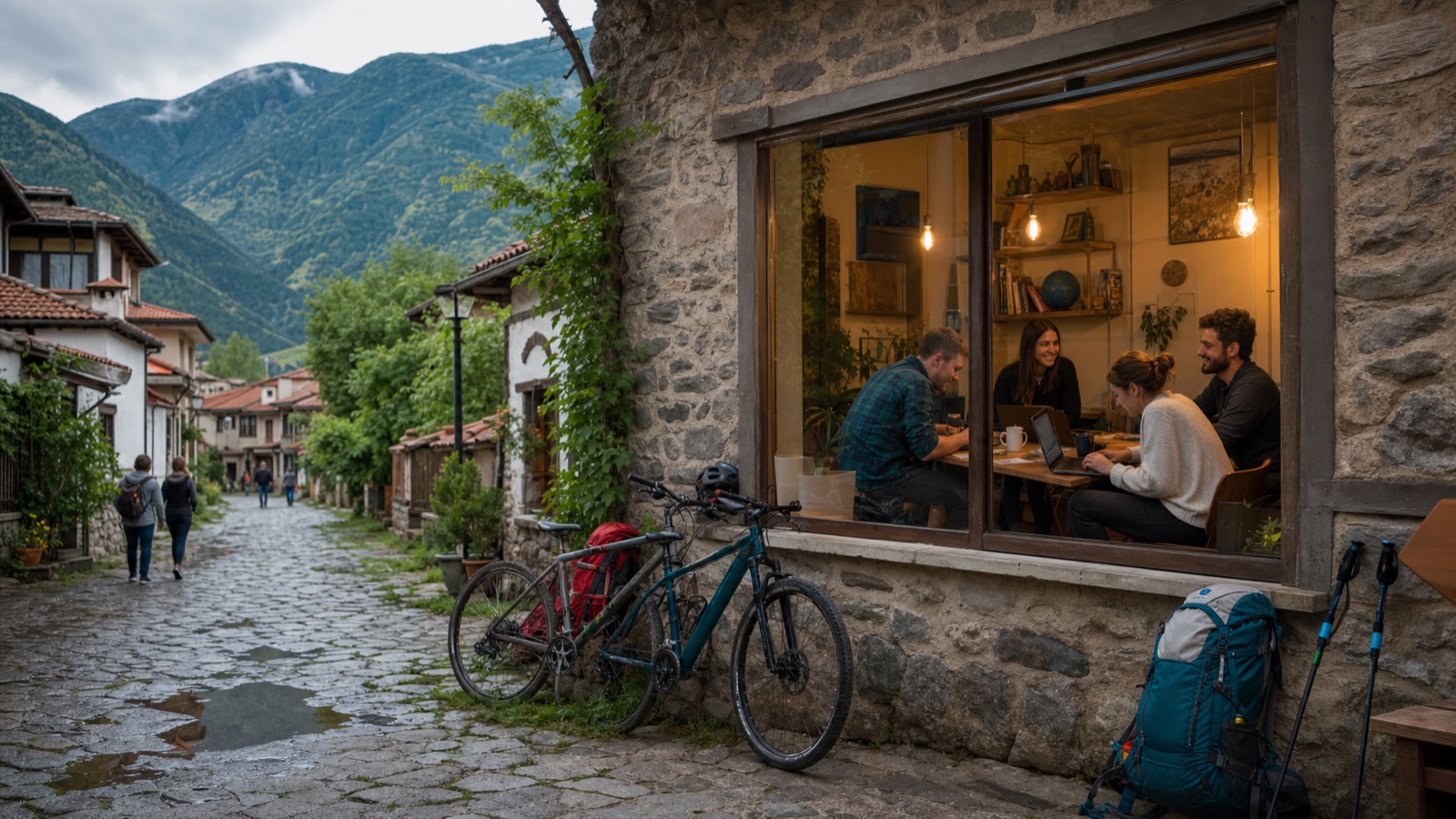
Bansko became one of Europe’s best-known digital nomad hubs without starting as an obvious remote-work destination. It was a Bulgarian mountain town associated with winter tourism, low costs, and dramatic nature. The transformation came from something harder to reproduce than inexpensive accommodation: a founder-led community that gave members a reason to participate and return.
Prefer listening? Play now in the BecomeNomad Podcast
In our conversation with Matthias Zeitler, the founder of Coworking Bansko, the central lesson was clear. Nomad hubs are not manufactured by adding desks and fast internet. They grow when people feel ownership, freedom, and connection.
The Location Created the Opportunity
Bulgaria offered a useful combination for European remote workers: relatively low living costs, access for EU citizens, mountains, and a town large enough to function but small enough for people to repeatedly encounter one another.
Bansko was also slightly raw. It did not feel overregulated or perfectly polished. That created inconveniences, but it appealed to nomads who valued experimentation and independence.
One Committed Founder Made a Difference
Many destinations announce that they want to become the next Bansko. They open a space, create marketing materials, and wait for a community to appear. Matthias argues that this misses the difficult part.
A strong hub often needs a founder willing to spend years welcoming people, organizing events, resolving conflicts, and maintaining a clear culture. The work is personal and cannot be replaced by a municipal campaign seeking to fill a temporary tourism gap.
Community Was the Product
Members did not experience Coworking Bansko only as a service they purchased. Many felt that it was partly their home and wanted it to grow. That sense of ownership produced word of mouth more powerful than conventional advertising.
The distinction is important. A coworking space rents desks. A community creates repeated interactions, shared rituals, introductions, collaborations, and reasons to remain after the workday ends.
Small Towns Make Repetition Easier
In a large city, nomads can attend the same events while continuing to live separate lives. In Bansko, the town’s scale increases the probability of meeting the same people at the coworking space, café, restaurant, or mountain trail.
Repeated contact lowers the effort required to form friendships. That is a major advantage for people who are regularly rebuilding social circles.
Freedom Attracts Independent People
The conversation also highlighted a cultural preference common among nomads: many value environments where they can design their own lives without excessive regulation. Bansko’s rough edges can feel liberating to someone arriving from a tightly controlled, expensive city.
Freedom has costs. Infrastructure may be inconsistent and services less predictable. The location works best for people who see some uncertainty as part of the exchange rather than a defect that must be eliminated.
A Hub Needs Economic Diversity
The members in Bansko were not all software developers. Remote income came from real estate, photography, design, online services, publishing, consulting, and professions that are difficult to classify. The larger shift is that more people can separate income from location.
Specialization still matters. A broad generalist can succeed, but a clear skill for which people know to call you often makes a remote career more resilient.
Can Another Town Reproduce Bansko?
The physical ingredients can be copied: affordable housing, nature, internet, transport, and workspaces. The social ingredients are harder. A new hub needs patient leadership, credible local relationships, and early participants who help create rather than merely consume the community.
The motivation also matters. Nomads have many choices. A destination that sees them only as replacement revenue will struggle against a place that genuinely supports the lifestyle.
Bansko’s Real Lesson
Bansko succeeded because it became meaningful to the people who arrived. The mountain setting and cost structure made the experiment possible, but belonging made it durable.
For nomads choosing a destination, this suggests looking beyond price and internet speed. Ask whether the place makes repeated human connection likely. For cities building a hub, begin with community—not branding.

0 Comments