
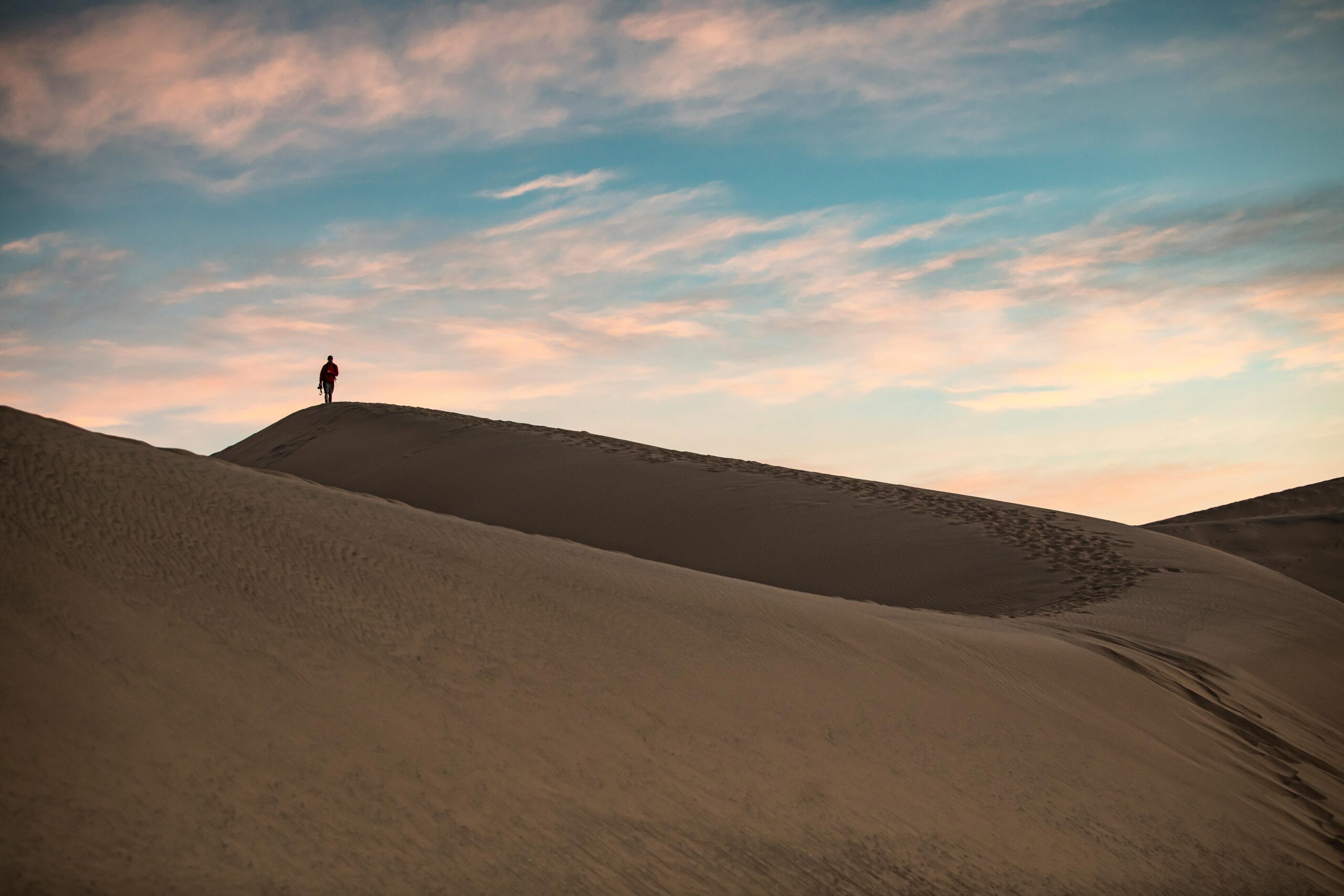
Every year offers an invitation to pause, reflect, and ask ourselves where we are heading, and more importantly, why. For many who live or dream of a nomadic life, travel is not just about crossing borders; it’s a journey toward understanding ourselves. But even within that freedom, it’s easy to lose direction. That’s why creating moments of reflection, our own small “spiritual audits”, can help us realign with our purpose for traveling.
Building Personal Milestones of Reflection
Traditional holidays like New Year’s or cultural moments of introspection can act as natural checkpoints to stop, breathe, and look inward. But beyond collective rituals, creating personal milestones throughout the year can be just as powerful. Some people treat their birthdays, travel anniversaries, or the start of a new chapter as opportunities to step back and ask: What has this year taught me? What needs to change?
This idea of self-created holidays encourages us to honor our own journey. Instead of only celebrating global dates, we can design personal rituals: whether that’s a quiet walk, a solo day of reflection, or even a digital detox . Moments to assess if our current path still aligns with who we want to become.

Using the Past as a Compass
There’s a lot of talk about goal setting, but looking backward can sometimes be more instructive than looking ahead. The past is tangible; it’s already ours. As Viktor Frankl once wrote, no one can take away the moments of meaning we’ve already lived. Those experiences, even the difficult ones, become the foundation that supports us through uncertain times.
Reflecting on the past year — what worked, what didn’t, what felt fulfilling — is not nostalgia. It’s strategy. It helps us identify patterns, limiting beliefs, and opportunities to grow. It’s how we ensure we’re not just moving for the sake of motion.
Rediscovering the Purpose Behind Travel
One major realization that often surfaces for long-term travelers is how easily the original purpose of travel can shift. In the beginning, travel may be driven by curiosity or freedom, choosing where to go, when to move, and what to explore. But over time, it can intertwine with work and routine. Traveling for work can feel paradoxical to the ideal of independence, yet it can also be deeply fulfilling if approached consciously.
For instance, some travelers discover that professional opportunities can take them to unexpected destinations, from East Africa to the Balkans or Central Asia, where they engage deeply with new cultures, communities, and projects. Traveling for work doesn’t have to mean losing autonomy; it can instead create bridges between expertise and exploration. It’s about aligning our livelihood with the spirit of adventure.
If your purpose for traveling once was to see the world, perhaps now it’s to contribute to it in new ways.
Rethinking Time Zones and Limiting Beliefs
Remote work has given rise to an interesting paradox: we can live anywhere, yet we often restrict ourselves mentally. Many digital nomads stay close to their teams’ time zones out of habit or guilt, assuming productivity depends on overlap. But experimenting with new rhythms, like living in Asia while your team works in Europe, can reveal the opposite.
Imagine waking up to a quiet morning with no notifications, dedicating the first half of your day to deep work or self-care, and only connecting with your team later when they’re awake. Suddenly, the time difference becomes an advantage rather than a barrier. The key lesson here is to challenge assumptions. Often, the rules we follow aren’t requirements; they’re just stories we’ve told ourselves about what’s “responsible.”
Freedom Beyond Location
Many people equate freedom with physical movement. Yet, even as a digital nomad, it’s possible to feel trapped: by a schedule, a business, or the constant demand to stay connected. True freedom includes freedom from operations: learning to delegate, to trust others, and to disconnect without guilt.
Location independence is only one layer of freedom. Emotional, professional, and mental independence matter just as much. Reclaiming that balance requires constant awareness, and sometimes, the courage to simplify rather than expand.
The Power of Staying Still
Ironically, one of the most meaningful lessons for nomads may come from staying in one place. Spending a full year in a single city, for example, can reveal the quiet beauty of stability: the friendships that deepen, the routines that take root, and the sense of belonging that grows naturally over time.
Staying still doesn’t mean giving up on the nomadic mindset; it means understanding that movement is not the only path to growth. It allows us to build semi-permanent “home bases”, places we can return to, where familiarity coexists with curiosity. In that sense, travel becomes cyclical rather than linear. We leave, but we also return.
Conferences and Communities
For many modern travelers, community is found not in a single location but through events and shared experiences. Conferences, gatherings, and festivals create temporary spaces where everyone arrives with open curiosity — ready to connect. These moments can feel like secular pilgrimages: they remind us that, at the heart of travel, lies the search for belonging.
Much like religious rituals once centered around community, today’s digital nomads gather around shared interests — entrepreneurship, creativity, remote work, or lifestyle exploration. These encounters ground us, reminding us that connection is as vital as movement.
Mental Nomadism: Traveling Without Moving
Finally, travel doesn’t always require a plane ticket. Sometimes, what we truly need is mental movement. When life starts to feel stagnant, we can reawaken our curiosity right where we are, by taking up a new hobby, exploring an unfamiliar neighborhood, or challenging our comfort zone. This “mental nomadism” invites us to think like travelers even when we’re not on the road.
The essence of travel is not distance, it’s perspective.
In the end, your purpose for traveling may evolve, just as you do.Whether through reflection, community, stillness, or movement, the goal remains the same: to keep discovering — the world, yes, but also yourself.
Listen to the full episode here: Apple Podcast | Spotify

0 Comments